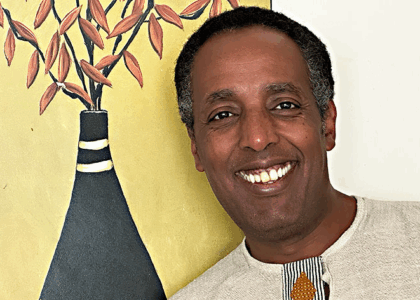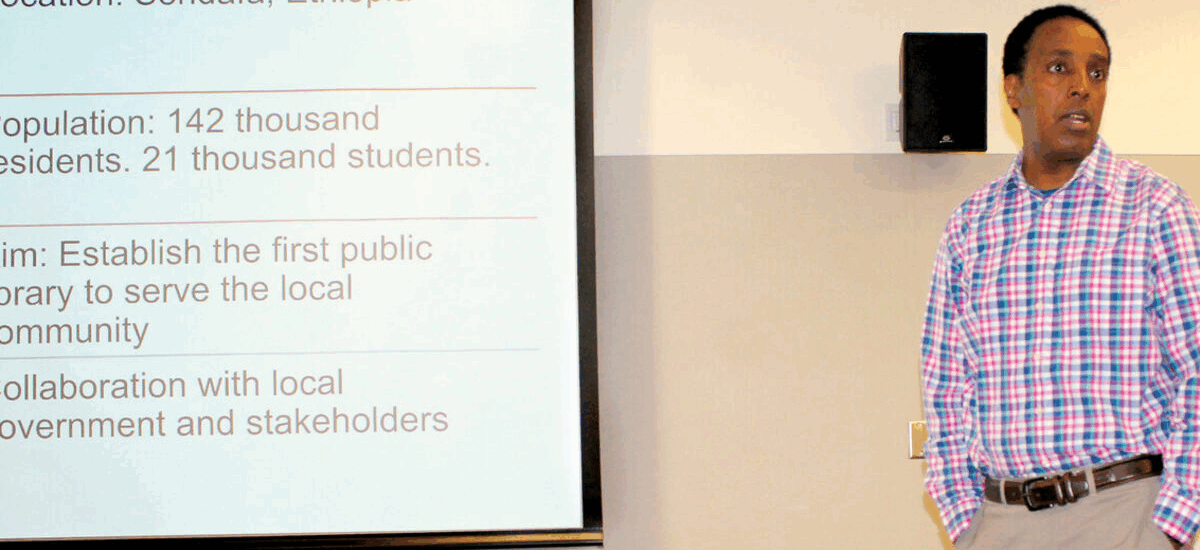
In a heartfelt presentation at Spokane’s South Hill Library on February 2, 2025, Eastern Washington University associate professor Kassahun Kebede shared his inspiring journey and mission to foster literacy and a reading culture among children in Ethiopia.
Kebede, a cultural sociologist who has called Cheney, Washington, home for nearly two decades, maintains deep ties to his native Ethiopia. Born in the small village of Sendafa to a family of impoverished farmers, he was the first in his family to attend college. He earned his bachelor’s and master’s degrees from Addis Ababa University—one of only three universities in Ethiopia at the time—before pursuing a PhD at Syracuse University in New York.
Reflecting on the stark contrast between the two countries, Kebede noted, “I was surprised that a significant number of Americans agree on the importance of public libraries.” In Ethiopia, with a population exceeding 120 million, there are only 149 public libraries, and the concept of “reading for fun” is largely unfamiliar. He estimates that 80% to 90% of Ethiopian children read below grade level, and the adult literacy rate is roughly half that of the United States.
A quote from Ray Bradbury’s Fahrenheit 451 has profoundly shaped Kebede’s mission: “Without the library, you have no civilization.” Inspired by this, he founded Libraries for Ethiopia (LiFE), a nonprofit dedicated to providing children in rural Ethiopian communities with access to libraries, books, community events, and free internet. His first project is in his hometown of Sendafa, which currently lacks a single public library. Kebede is working to change that by renovating a building to serve as a community library, a project he discussed during his Spokane talk.
Kebede’s efforts extend beyond Ethiopia. In Cheney, where only about 36.8% of adults aged 25 and older hold college degrees, he advocates for literacy as a tool to combat poverty. “There is a dire, dire relationship between literacy rates and poverty,” he emphasized, urging students and community members to persevere in their education. “Whatever degree you get, please graduate,” he said. “Please don’t quit.”
Through Libraries for Ethiopia and his work as an educator, Kebede is building bridges between communities, fostering a love for reading, and creating opportunities for future generations. His story is a testament to the transformative power of education and the enduring importance of libraries in shaping civilizations.
For more information on Kebede’s initiative, visit librariesforethiopia.org.